Fifteen Years
xkcd.com

1. The Context: The "Cancer Arc"
To fully appreciate this comic, you must understand the history behind it. In 2010/2011, Randall’s fiancée (now wife) was diagnosed with Stage III breast cancer. Over the years, Randall has released specific comics marking the passage of time since that terrifying diagnosis:
- "Probability" (#881): Dealing with the initial statistics of survival.
- "Two Years" (#1141): A fragile celebration of making it past the initial treatment phase.
- "Seven Years" (#1928): Moving further into remission.
"Fifteen Years" is the latest, and perhaps final, major milestone in this specific narrative arc. In oncology, reaching the 15-year mark often means a patient’s life expectancy and risk of recurrence are statistically similar to someone who never had cancer.
2. Panel-by-Panel Breakdown
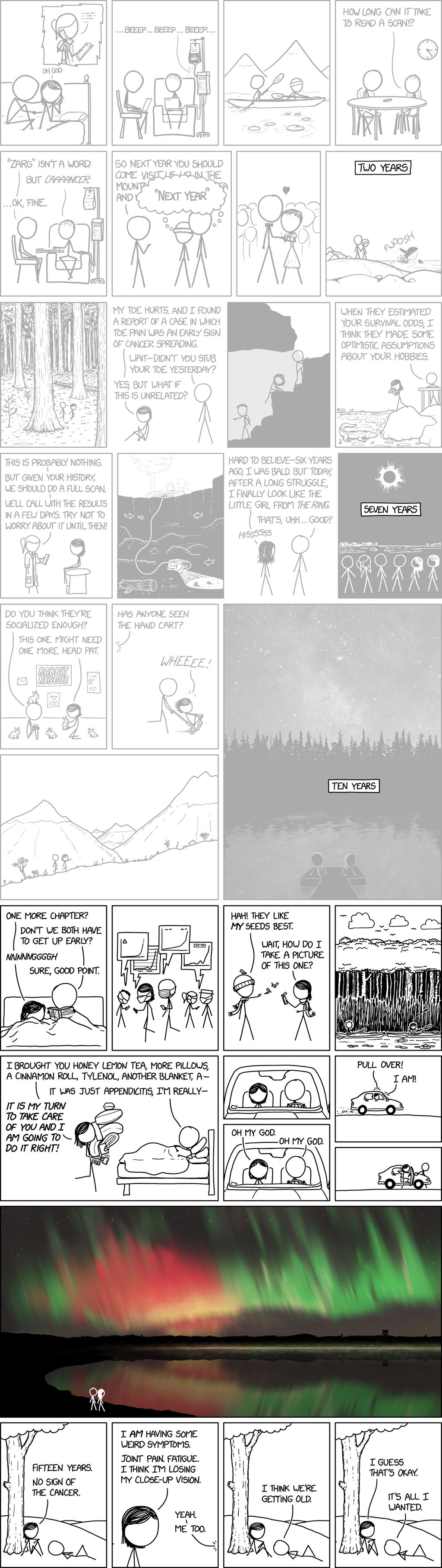
The comic is structured as a montage of moments—some terrifying, some mundane—spanning the last decade and a half.
The Early Anxiety (Rows 1-2)
- The Hospital Scenes: The comic starts with flashbacks to chemotherapy and hospital beds ("Bleep... Bleep...").
- The "Next Year" Promise: We see them planning a trip to the mountains "next year." In the context of a severe diagnosis, making plans for a year in the future is an act of radical hope.
- The "Two Years" Mark: A reference to the previous comic. They are looking at a bird, simply existing.
The Middle Years: Fear and Normalcy (Rows 3-5)
- "Scanxiety": There is a panel where Randall’s wife worries that a pain in her toe is the cancer spreading. This is a very real psychological burden for survivors; every minor ache feels like a return of the disease. The doctor reassures them, but the fear is palpable.
- Life Happening: Interspersed with fear are signs of life moving forward. We see them having children (the stick figures with smaller stick figures), hiking, playing games, and dealing with everyday chaos ("Has anyone seen the hand cart?").
- "Ten Years": A quiet panel of them looking at the stars. The silence suggests a peaceful stability.
The Climax: The Aurora (Large Color Panel)
- Towards the bottom, the comic breaks its usual black-and-white format for a stunning, wide-aspect depiction of the Aurora Borealis (Northern Lights).
- Symbolism: This represents the beauty of the world they fought to stay in. It is a moment of pure awe, likely fulfilling the travel promise made in the earlier panels. It signifies that they didn't just survive; they lived.
3. The Ending: The Twist on Aging
The final row delivers the emotional punchline that defines the comic.
Wife: "I am having some weird symptoms. Joint pain, fatigue. I think I'm losing my close-up vision."
Randall: "Yeah. Me too."
Wife: "I think we're getting old."
In any other context, complaining about joint pain and bad eyesight is negative. Here, it is the ultimate victory.
Randall (Final Panel): "I guess that's okay. It's all I wanted."
The Core Theme: The comic reframes the concept of aging. We often fear getting old, but for a cancer patient and their partner, getting old is the goal. It is the privilege that was almost taken away from them. The "weird symptoms" aren't signs of cancer returning; they are the mundane, beautiful symptoms of having survived long enough to age naturally.
Summary
"Fifteen Years" is a celebration of the mundane. It acknowledges the trauma of the past 15 years—the medical scans, the panic over toe pains, the exhausting treatments—but concludes with deep gratitude for the "boring" reality of growing old together. It is widely considered one of the most touching comics Randall Munroe has ever published.